



Throughout the historical and cultural evolution of stone, this material has advanced in tandem with the development of human civilization. In human life, stone has been an ever-present companion-from early tools for production such as stone knives, axes, and grinding stones, to household furnishings like stone tables, bowls, and jars; and from the architectural and decorative stonework of structures like the Pyramids, the Colosseum, the Temple of Baalbek, and the Great Wall, to the aesthetic artistry of sculptures found at sites such as the Dazu Rock Carvings, the Longmen Grottoes, and the Mogao Caves.
Regarding major architectural and decorative stone materials, products can be categorized into the following groups based on their intended design effects and functional applications:
Stone Blocks (Rough Stone)
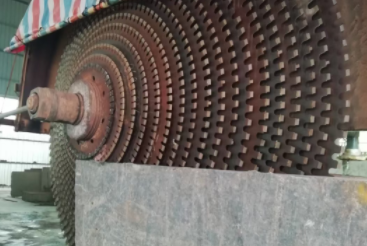
(Stone Block Cutting)
Stone Slabs
1. Large Slabs (Gang-sawn Slabs) - Slabs produced by directly sawing large stone blocks;
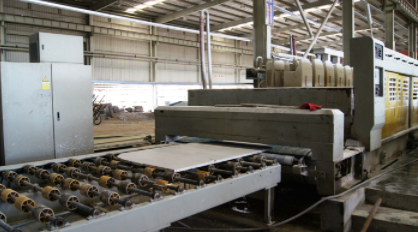
(Stone Slab Polishing and Processing)
2. Strip Slabs - Slabs cut according to the diameter of the saw blade used; common widths include 60cm, 70cm, 80cm, 90cm, and 100cm. (These are primarily associated with certain domestic stone varieties produced by smaller-scale manufacturers that lack the facilities to install gang saws or sand saws);
3. Project Slabs (Cut-to-Size Slabs) - Also known as "standardized slabs," these are panels processed at the factory according to specific dimensions derived from engineering shop drawings and site surveys, designed to fit the actual layout of decorative walls;
4. Composite Slabs - Products formed by bonding two different materials together using adhesive. The face layer typically consists of precious or high-value stone materials, while the backing layer-depending on client requirements-may consist of stone, honeycomb panels, aluminum-plastic panels, or similar materials;
5. Thin Slabs - A product commonly found in international markets (similar in concept to ceramic tiles in domestic markets). Common dimensions include 305mm x 305mm and 457mm x 457mm, typically with a thickness of 1cm. These are designed for ease of installation and retail sales, and are frequently displayed and sold in retail showrooms abroad;
6. Countertops - Primarily categorized into kitchen countertops, vanity tops, coffee table tops, dining table tops, side tables, and commercial counters (available in both solid slab and composite slab varieties).
Irregular/Custom-Shaped Stone (Specialty Stone)
1. Stone Moldings/Profiles - Based on their external contours, these can be classified into straight moldings, curved moldings (flat arc), curved panels, standard slab-cut moldings, and various other profiles. Consequently, in architectural interior design-depending on the specific context-various combinations of decorative moldings are frequently employed to achieve optimal aesthetic results while maintaining cost efficiency. These moldings are typically applied to door and window casings, decorative wall bands (such as dado rails), cornices, picture and mirror frames, as well as for finishing edges or purely ornamental purposes.
2. Columns - The structural composition of a column is generally divided into three parts: the capital (top), the shaft (body), and the base (pedestal). With advancements in manufacturing techniques, columns are now available in two forms: hollow and solid. Hollow columns are created by cladding a concrete core with flat or curved panels to achieve the desired visual effect, whereas solid columns consist of a single, monolithic block of material. Furthermore, to enhance their decorative appeal, columns are categorized based on their stylistic profiles-including Roman columns, plain-shaft columns, twisted columns, tapered columns, drum-shaped columns, and intricately carved columns (such as the *Huabiao* columns found in Beijing), as well as baluster posts.
3. Fireplaces - The fireplace is a concept of foreign origin. In Western cultures, its primary function has historically been to provide heat through burning wood; however, the design and craftsmanship involved are often highly sophisticated-much in the same way that traditional shrines hold cultural significance in our own context. Fireplaces can be constructed from paneling or from solid blocks of material; additionally, they frequently undergo intricate carving to further enhance their aesthetic value.
4. Washbasins - These are crafted from small blocks of raw stone material. The design process primarily leverages the stone's natural veining and texture, thereby achieving a perfect fusion of functionality and visual appeal.
Tombstones - Tombstones represent a product with a long and rich history. Their enduring popularity stems largely from their inherent durability, which resonates deeply with the human psychological need for permanence and remembrance. As society evolves, an increasing number of people are choosing to commission exquisitely carved stone monuments, tombstones, and urns as a means of honoring the deceased and expressing their enduring love and remembrance.
Mosaics
Mosaics are another decorative art form of foreign origin (known in English as "mosaic"). In Western cultures, mosaics have been immensely popular for centuries-even millennia-ago; they are particularly renowned for their breathtaking beauty and intricate detail within religious structures such as cathedrals. The materials used to create mosaics are incredibly diverse, ranging from stone, glass, and wood fragments to ceramics; in contemporary practice, even metals and gemstones are now incorporated into mosaic designs. The defining characteristics of mosaics lie in their remarkable versatility and their capacity for rich, vibrant color palettes. Based on their installation format and function, mosaics can be categorized into linear strips, modular tiles, or intricate pictorial patterns. This medium allows for the rendering of a vast array of designs and motifs with extraordinary precision and artistic nuance. For instance, when viewing a portrait of the Mona Lisa from a slight distance, it is virtually impossible to distinguish whether it is a mosaic or an oil painting.