




Sintered stone is a mass-produced industrial product, whereas marble is a natural material extracted and processed from quarries; the former is a manufactured good, while the latter is a natural product.
One might also draw the following analogy: marble is like a beauty who has never undergone cosmetic surgery, while sintered stone resembles a beauty who has traveled to Korea for plastic surgery-one embodies natural beauty, the other, reconstructed beauty.
There are four key differences between sintered stone and marble.
1. Origin:
Marble is a naturally quarried stone, with each slab possessing a unique grain pattern.
Sintered stone (Rock Slab) is a product manufactured using industrial machinery; its appearance exhibits a high degree of stability and consistency.
2. Physical and Functional Properties:
Hardness: Marble has a relatively low Mohs hardness (3–4), making it somewhat fragile and susceptible to scratches or chipping upon impact. Sintered stone, conversely, has a high Mohs hardness (6–7) and offers superior resistance to abrasion, scratching, and impact.
Density, Water Resistance, and Stain Resistance: Marble possesses a relatively porous structure with a high water absorption rate. Sintered stone features a high and uniform density with extremely low water permeability; consequently, its resistance to water and stains far exceeds that of marble.
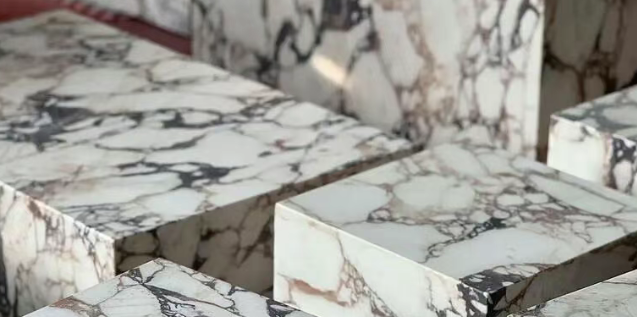
Stability: The calcium carbonate content in marble makes it susceptible to weathering and loss of luster when exposed to atmospheric conditions. Sintered stone, however, boasts high stability and durability; it does not discolor or warp over time.
Chemical and Fire Resistance: Marble is vulnerable to acids and alkalis, and it may crack or shatter when exposed to open flames or high temperatures. Sintered stone, on the other hand, exhibits strong resistance to acids and alkalis, and can even withstand direct exposure to open flames without sustaining damage.
3. Environmental Safety:
Natural marble may contain trace levels of natural radioactivity.
Sintered stone presents no issues regarding radioactivity.
4. Maintenance Costs:
Marble requires regular maintenance (e.g., annually); otherwise, it is prone to issues such as discoloration or yellowing, resulting in relatively high maintenance costs.
Sintered stone is durable and stable, requiring no special maintenance in its daily use.
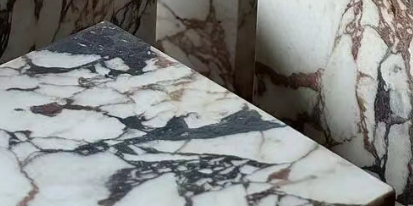
In terms of comprehensive performance-including resistance to abrasion, scratching, acids, alkalis, and oil stains-sintered stone "outperforms" marble in every respect; however, marble retains the unique aesthetic appeal of natural grain patterns. If it were up to you, which would you choose for your home renovation: sintered stone or marble?