

Sintered stone and quartz are two countertop materials commonly used in daily life, and they have long been locked in fierce competition within sales channels. Taking the Chinese market as an example, high-end clients are split in their preferences: some opt for sintered stone, while others choose imported quartz. So, what exactly distinguishes sintered stone from quartz?
The following compares two common countertop materials-sintered stone and quartz-analyzing their differences across multiple dimensions and offering purchasing advice for your reference.
1. Raw Materials and Manufacturing Process
Sintered Stone: Composed of natural minerals, quartz, silica, and color glazes as raw materials. It is formed using presses exerting over 30,000 tons of pressure, followed by processes such as glazing, high-temperature firing (at 1280°C), and polishing; it is classified as a dense, sintered slab.
Quartz: Consists of over 90% quartz sand acting as aggregate, combined with resins, pigments, and other additives. It is manufactured through vacuum high-pressure compaction and high-temperature curing; it is classified as an engineered stone.
2. Core Performance Comparison
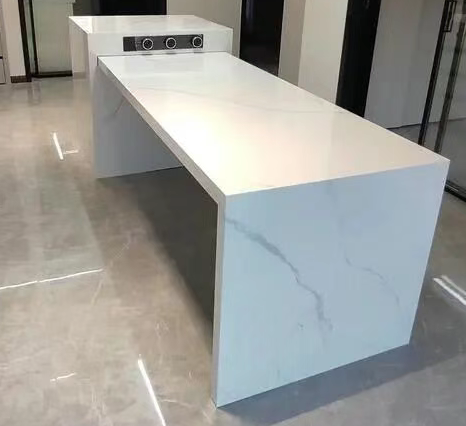
Hardness and Abrasion Resistance: Sintered stone (Mohs hardness 6–7) outperforms quartz (Mohs hardness 4–5). Sintered stone offers superior resistance to scratches from sharp objects.
Stain Resistance: The surface of sintered stone is dense and non-porous, offering exceptional resistance to stains and chemical corrosion, achieving "zero permeability." Quartz possesses strong stain resistance; however, lower-quality products-or those subjected to prolonged use (5–10 years)-may experience discoloration due to resin aging.
Heat Resistance: Sintered stone boasts excellent heat resistance, allowing hot cookware to be placed directly upon its surface. Due to its resin content, quartz is prone to aging, loss of luster, or cracking when exposed to sustained high temperatures. Furthermore, high heat may cause it to release formaldehyde; therefore, placing open flames or high-temperature cookware fresh from an oven directly onto the surface is strictly prohibited.
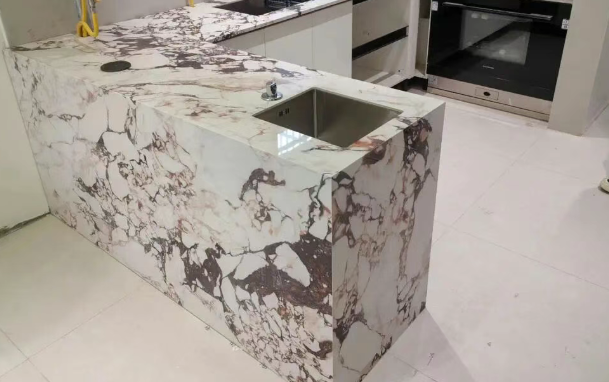
Impact Resistance: Thanks to its resin content, quartz possesses a certain degree of toughness; impacts may result only in minor chips or nicks, rather than causing the entire slab to crack. Sintered stone, while extremely hard, tends to be brittle; a sharp, heavy localized impact can easily cause the entire slab to crack-damage that is typically irreparable.
Aesthetics: The surface patterns of sintered stone are created using digital inkjet technology, resulting in realistic, seamless textures that convey a strong sense of visual continuity and high-end sophistication-making it particularly well-suited for large-format countertops. Quartz patterns are often created through manual imitation; when installed over large surface areas, repetitive patterns may become noticeable. 3. Pricing and Purchasing Recommendations
Retail Price: The manufacturing process for sintered stone is complex, resulting in a higher price point (mainstream brands typically range from approximately 2,000 to 5,000 RMB per linear meter, or higher). Quartz stone, by comparison, is more affordably priced (mainstream brands typically range from approximately 800 to 2,000 RMB per linear meter).
3 Purchasing Recommendations:
If you prioritize exceptional aesthetics, top-tier heat resistance, and superior stain resistance-and if you have a generous budget and tend to be careful in your usage habits (specifically avoiding impacts from heavy objects)-sintered stone is an excellent choice.
Conversely, if you prioritize value for money, require greater impact resistance and toughness (such as for frequent chopping or heavy cutting), anticipate intensive daily use, or have a limited budget, quartz stone represents a more practical and economical option.