

Product Introduction
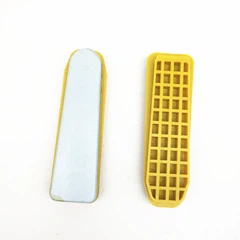
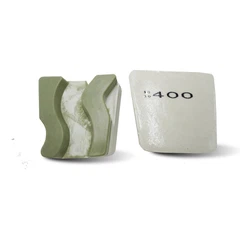
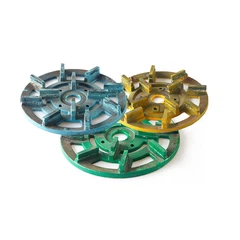
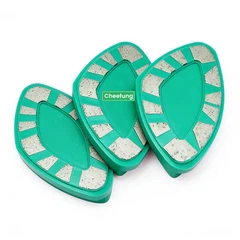
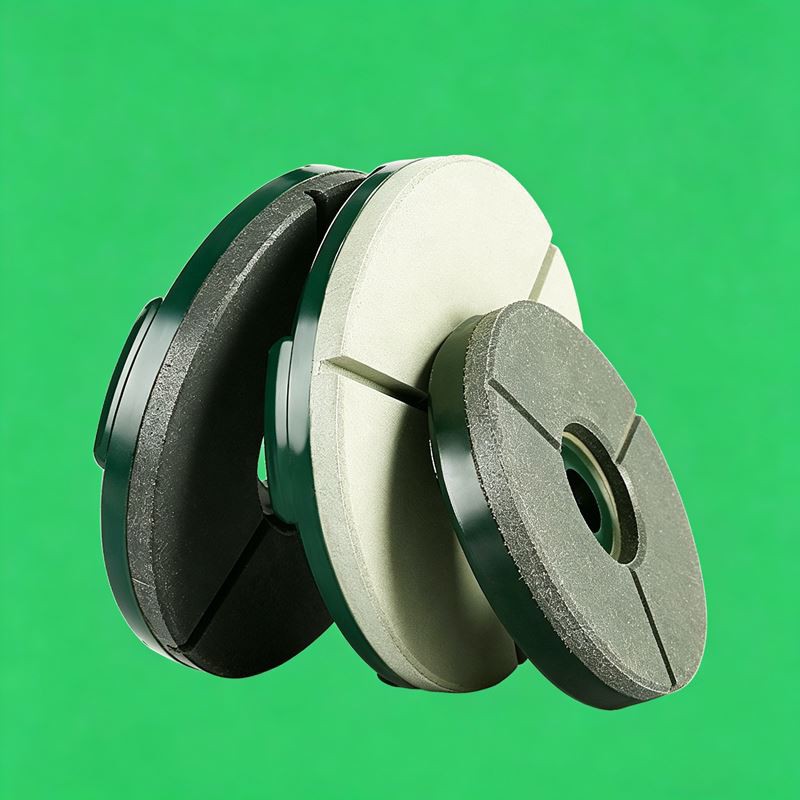
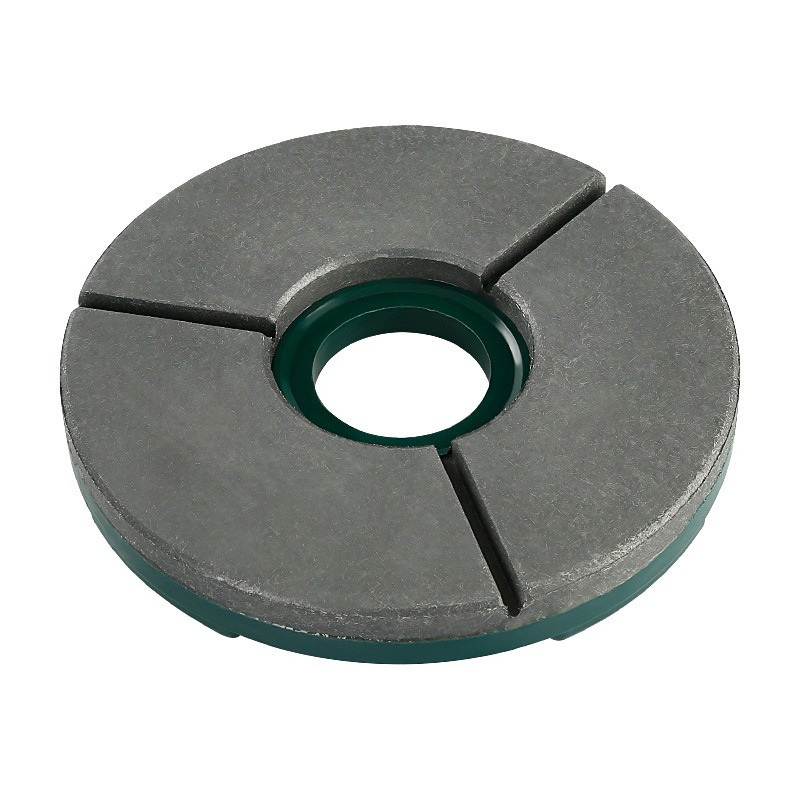
Buff Polishing disc is used for granite slabs or tiles, with high processing efficiency, fast and consistent shinning.
This buff polishing disc comes with a traditional 3-groove continuous rim segment.
The buff polishing disc is a pressed abrasive made with a specialized bond, used for final polishing or buffing on soft to hard granite slab surfaces in automatic line polishing machines or manual polishing machines. It is primarily intended for polishing granite strips or tiles up to 1.2 meters in width.
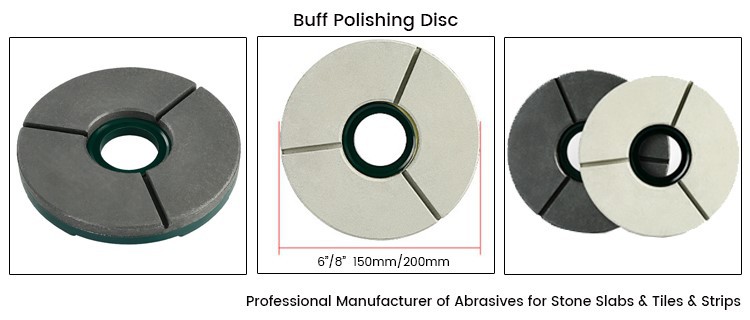
The black buff and white buff are widely in use for dark color and light color granite respectively. Red buff is sometimes required for polishing red or brown granite and it is also available upon request.
Specification
|
Bond |
Resin Bond |
|
Grinding Type |
Buff Polishing |
|
Diameter |
6"/150mm; 8"/200mm; 10"/250mm |
|
Application |
Granite slabs, tiles, strips, |
|
Shape |
Grinding Disc |
|
Diamond Grit |
1500#, 2000#,3000#. |
* Accept OEM/ODM, accept customization;
* Packaging can be customized;
* Contact customer service for details;
* Other specifications can also be customized;
(150/200mm white/black buff polishing disc)
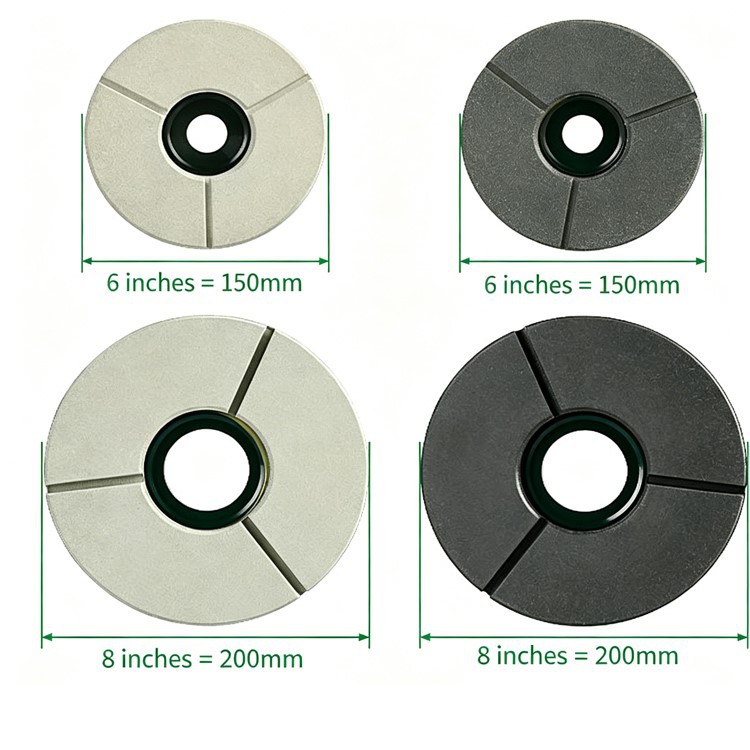
What is the difference between a white buff polishing disc and a black buff polishing disc?
In the context of stone grinding and polishing, "white polishing disc" and "black polishing disc" typically refer specifically to the final type-or types-of "buffing disc" used during the "polishing" stage. The fundamental distinction lies in their application: white disc are used for light-colored stone, while black disc are used for dark-colored stone. Consequently, the most direct criterion for selecting between them is the color of the stone itself.
Why Is "Color Matching" Essential?
Selecting a polishing disc that belongs to the same color family as the stone is crucial, as it prevents dye penetration. Stone surfaces contain microscopic pores; if the colors do not match, pigments from the polishing pad may seep in-causing light-colored stones to turn gray and dark-colored stones to develop a whitish haze-thereby compromising the final color and clarity.
Polishing Discs in Other Colors
In addition to white and black discs, you may also encounter colors such as red and yellow. These, too, adhere to the principle of "color-matching"-meaning they are designed for use on specific types of stone:
Red discs: Primarily used for red or brown granite-for example, China Red, Indian Red, Maple Red, etc.
Yellow/Green discs: Suitable for stone varieties of the corresponding color.
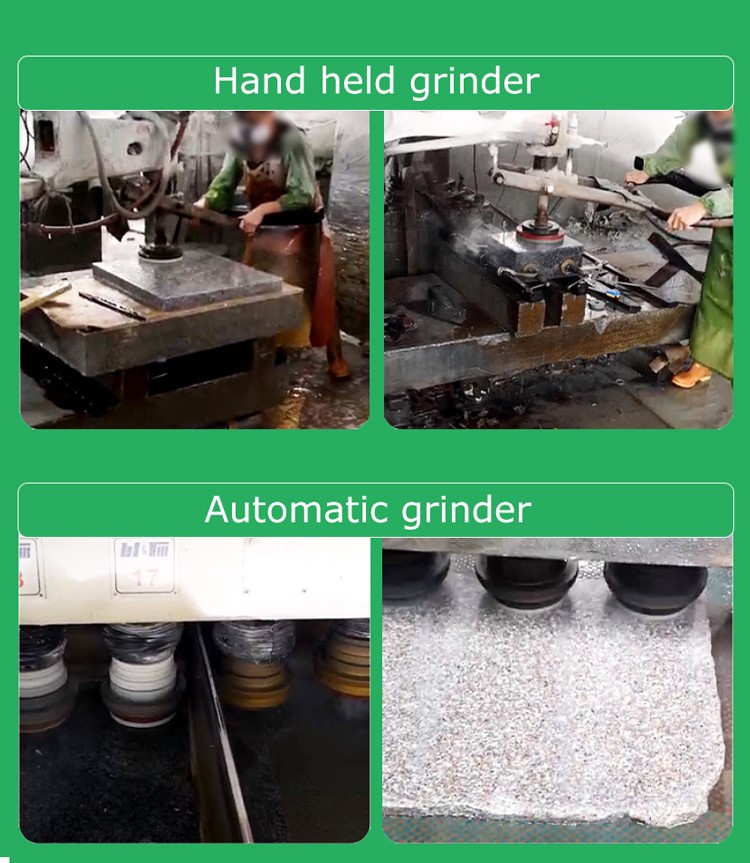
(These buff polishing discs are used on both hand held grinder and automatic grinder)
Standard Usage and Important Considerations in Practice
White and Black Buffing Discs represent the final stage of the "ultimate polishing" process. They are typically employed only after all fine-grinding steps have been completed; using the correct technique ensures maximum efficiency and superior results:
Timing of Use:
These discs constitute the final operation within the complete set of polishing discs; their grit designation is typically marked as "Buff." Please ensure that thorough fine-polishing-using resin-bonded pads of #3000 grit or higher-has been completed prior to using these pads.
Equipment and Parameters:
These discs are suitable for use with both handheld grinders and fully automated continuous polishing machines. A spindle speed of approximately 1000 RPM (revolutions per minute) is recommended for the polishing machine.
Predominantly Wet Polishing:
These types of polishing Discs are primarily designed for wet application, requiring a continuous supply of water during processing. This facilitates lubrication and cooling-preventing the stone slab from "burning" due to overheating-while also flushing away grinding debris to achieve a clearer, more pristine surface finish. If permitted by the product instructions, a small amount of dry polishing may also be incorporated to enhance polishing efficiency.
Advanced Techniques:
For high-hardness stones or specific dark-colored stone varieties, consider employing a two-step method: "Black Buffing for Base Polishing, White Buffing for Final Finishing." Begin with the Black Buffing Pad for the initial polish, then follow with the White Buffing Pad for the final shine to maximize ultimate gloss levels and surface quality.
Key Principle:
Selecting a polishing pad that matches the color of the stone material is crucial for achieving optimal polishing results and preventing color discrepancies.
Broadly speaking, there is no fundamental difference between "white buff polishing" and "black buff polishing" in terms of their working principles or ultimate objectives. The distinction between the two is primarily based on the management of the stone's color-specifically, to prevent dye penetration and thereby ensure the optimal final result.
In actual practice, however, one encounters a wide variety of situations. Furthermore, it is necessary to factor in various considerations such as material costs, labor expenses, management overhead, and time constraints. Consequently, the decision of whether to employ white or black polishing techniques should ultimately be guided by practical experience and the specific circumstances at hand. If you have any questions regarding this subject, please feel free to submit them to us; our team of experts will be happy to provide you with a tailored solution.