

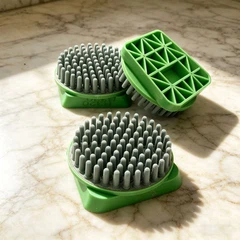


As the stone market moves beyond a simple preference for traditional high-gloss, mirror-like finishes, designers and end-users are increasingly favoring specialized surfaces that offer a naturally weathered look, a tactile, three-dimensional texture, and slip-resistant properties.
To achieve these high-value surface finishes through large-scale, automated continuous polishing lines, the essential abrasive tool is the stone abrasive brush-commonly known in the industry as the "stone antique brush."
What is a Stone Abrasive Brush?
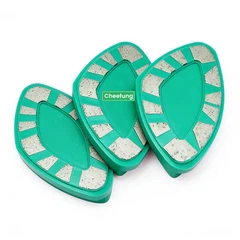
A stone abrasive brush is a specialized polishing tool constructed of high-polymer filaments-which are internally impregnated or embedded with sharp abrasive grits-securely anchored to a designated base block.
Under the high-speed rotation and heavy downward pressure of the grinding heads on an automatic continuous polishing machine, the toughness and aggressive cutting force of these filaments are activated. The brush preferentially grinds away and sweeps out the softer compounds of the stone surface while leaving the harder crystal veins and mineral structures intact. This differential grinding process transforms an originally flat slab into a beautifully textured, three-dimensional surface.
Main Finishes and Application Scenarios
By utilizing a sequence of different brush grits, an automated line can produce several highly commercial surface finishes:
Antique Finish: Simulates the natural weathering and water-washing of stone over centuries. The surface presents a natural, uneven texture that is rustic and highly artistic.
Leather Finish: Taking the antique finish a step further, this involves finer polishing to give the stone a soft, undulating surface that mimics premium leather. It is smooth to the touch, highly slip-resistant, and stain-resistant. This is extremely popular for high-end countertops and outdoor paving.
Honed/Lappato Finish: Achieved through light brushing with finer grits, this finish gently dulls the high gloss, resulting in a subtle, silky matte appearance.

Core Classification of Stone Abrasive Brushes
To ensure seamless integration with various types of automatic continuous polishing machines, the bases of these brushes are engineered to perfectly match traditional metal or resin abrasive blocks:
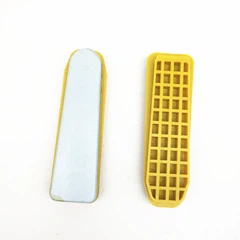
1. Fickert Abrasive Brush
Equipment Fit: Primarily installed on the oscillating grinding heads of automatic granite continuous polishing machines.
Characteristics: Features an elongated, rectangular design offering a large contact area and a wide grinding trajectory. It is highly efficient for processing ultra-hard granite and engineered quartz slabs on high-speed continuous production lines.

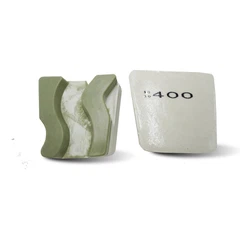
2. Frankfurt Abrasive Brush
Equipment Fit: Primarily installed on the rotating grinding heads of automatic marble continuous polishing machines.
Characteristics: Features the classic horseshoe (or dovetail) shape. It runs exceptionally smoothly and prevents edge gouging or chipping. It is the perfect choice for processing softer and more brittle stones like marble, limestone, and travertine.

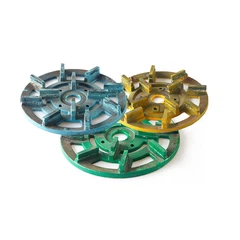
3. Round Abrasive Brush
Equipment Fit: Typically equipped with a hook-and-loop (Velcro) or snail-lock backing. It is primarily used on manual floor grinders, single-head bridge polishers, or floor restoration machines, rather than serving as the main tooling for large automatic slab lines.

Filament Material Selection: Silicon Carbide vs. Diamond
The cutting lifespan and final quality of the finish depend directly on the type of abrasive embedded within the polymer filaments. There are two mainstream options:
Silicon Carbide Brush (SiC):
Structure: Filaments are evenly impregnated with Silicon Carbide particles.
Advantages: Highly cost-effective with a lower initial purchase price.
Applications: The standard choice for softer to medium-hard stones, including marble, travertine, and artificial stone.
Diamond Brush:
Structure: Filaments are embedded with premium synthetic industrial diamond powder.
Advantages: Delivers an incredibly aggressive cutting force and exceptional wear resistance. The lifespan of a diamond brush is typically several times that of a SiC brush, and the filaments will not soften or deform under heavy machine pressure.
Applications: Exclusively used for ultra-hard granite, compact quartzites, or in high-capacity automated factories that demand maximum throughput with minimal downtime for tool changes.


Tips:
In the actual market, there are many types of silicon carbide and diamond bristles to meet different market demands. If you are a customer of Cheefung, you don't have to worry. You don't need to master the knowledge of bristle materials. Just tell us the usage scenario and performance requirements of your grinding brush, and we will provide you with the most suitable and cost-effective product solution
Grit Sequence and Processing Flow on an Automatic Line
On an automatic continuous polishing machine, the configuration of abrasive brushes must follow a strict "coarse to fine" sequence. Standard grits (mesh sizes) typically include: 24#, 36#, 46#, 60#, 80#, 120#, 180#, 240#, 320#, 500#, 800#, and 1000#.
Roughing Phase (24# - 60#): Installed on the leading grinding heads of the line. These coarse filaments are highly destructive. They forcefully tear away the soft structures of the stone surface, rapidly carving out deep, 3D textures.
Transition and Refining Phase (80# - 240#): Installed on the intermediate grinding heads. These brushes smooth out the harsh scratches and burrs left by the coarse phase, making the undulating edges of the stone softer, rounder, and more natural to the touch.
Polishing and Color-Enhancing Phase (320# - 1000#): Installed on the rear grinding heads. The fine filaments no longer carve into the stone structure; instead, through high-speed frictional polishing, they seal the pores and bring out the natural color saturation of the stone, creating that premium "leather" gloss.

(stone abrasive brush located on the polishing line)
Cheefung Operation Tip: In real-world automatic line operations, if the starting slab has a smooth sawn finish, it is highly recommended to pre-treat the stone. Pass the slab through a flaming machine (to create a flamed/thermal finish) or a bush-hammering machine first. Once the surface is heavily textured, feed it into the continuous polishing machine equipped with abrasive brushes. This method drastically reduces the workload on the brushes, increases line speed, and results in a much deeper, more natural 3D texture.