



1_Product Description
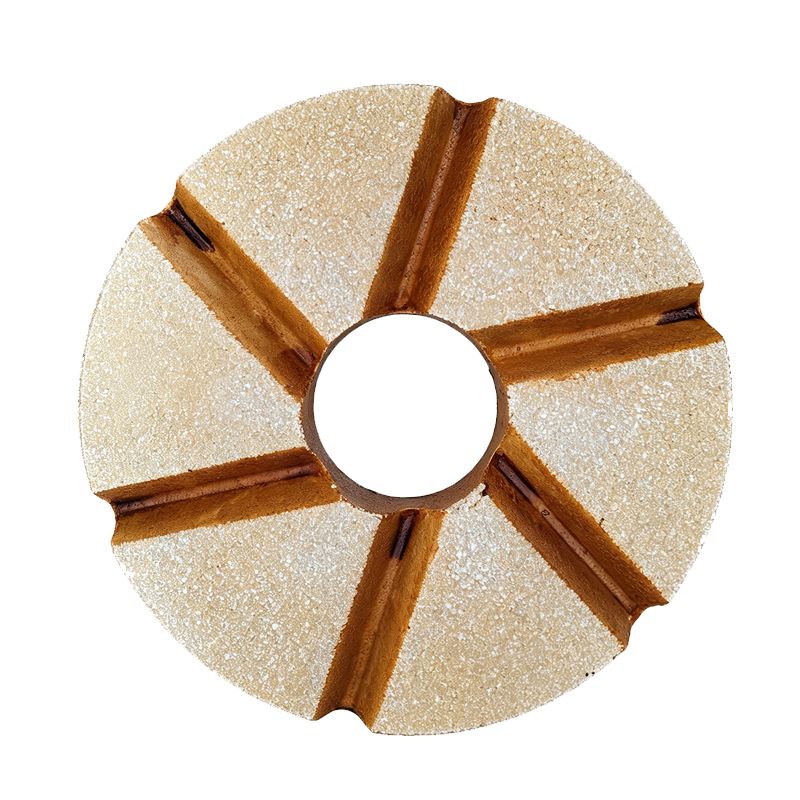
Diameter 250mm/10inch 5 Extra or 10 extra Oxalic Acid Polishing Disc is produced by mixing and then either pressing or casting a combination of oxalic acid crystals, a binder (modified polymer material), and ultra-fine, micron-sized polishing powder (such as fine aluminum oxide powder).
Primary polishing agent:
oxalic acid crystals. Industrial-grade, high-purity oxalic acid-comprising 10%–35% of the formulation-serves as the core component for chemical polishing. Versions with higher oxalic acid content are designed for rapid gloss development, while those with lower content are tailored for achieving a refined, high-luster finish.

Abrasive Media:
Ultra-fine, micron-scale polishing powders are used, such as aluminum oxide (primarily white fused alumina).
Fine-grade powders-typically in the W3.5 to W10 range-are generally selected to perform mechanical abrasion and level out scratches; their hardness is well-suited for softer stone materials, minimizing the risk of creating deep gouges. In some formulations designed for initial (coarse) polishing, a small amount of silicon carbide may be added to enhance cutting power.
Bonding Matrix (Binder):
Typically composed of a phenolic resin system (a modified polymeric material), this matrix binds the oxalic acid and abrasive particles together into a solid form. It also regulates the wear rate of the abrasive block, ensuring the stable release of its chemical components.
Polishing Principle
1. During wet polishing, oxalic acid is gradually released and undergoes a mild chemical reaction with the calcium carbonate present on the surface of marble or terrazzo. This process forms a soft layer of calcium oxalate, which softens the microscopic protrusions and the edges of scratches on the stone surface.
2. Simultaneously, the fine aluminum oxide powder embedded in the polishing pad performs micro-abrasion, rapidly removing the softened layer and minor scratches to level the stone surface.
3. This repeating cycle of chemical etching and mechanical abrasion ultimately produces a high-gloss, mellow, mirror-like finish. Compared to purely mechanical polishing with diamond abrasives, oxalic acid polishing achieves a high-gloss finish more quickly, resulting in greater clarity and depth-without the "dry," "orange-peel" texture often associated with other methods.
2_Structural Features and Common Specifications
Structural Design:
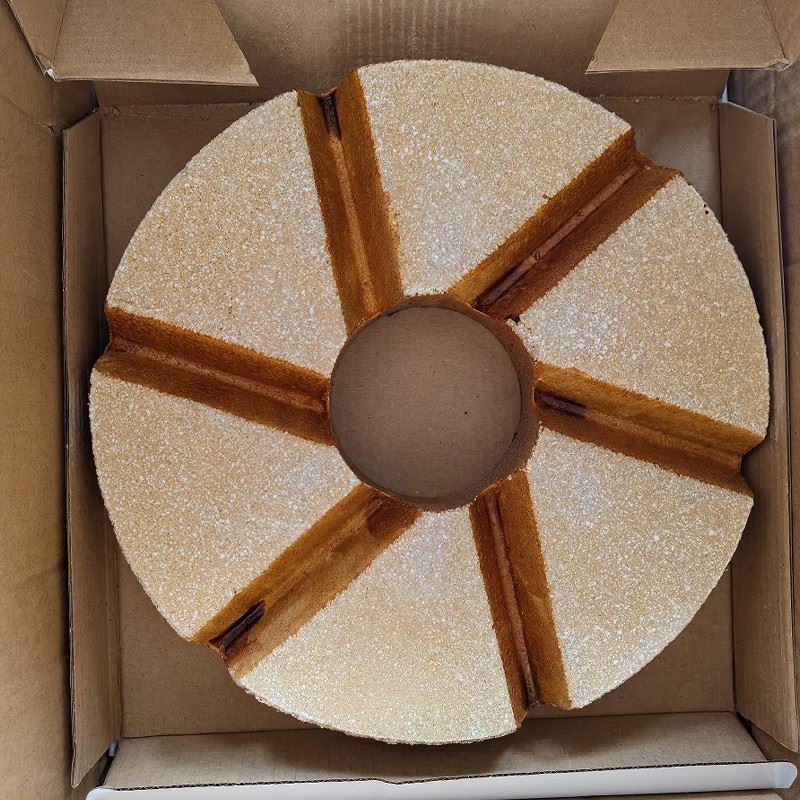
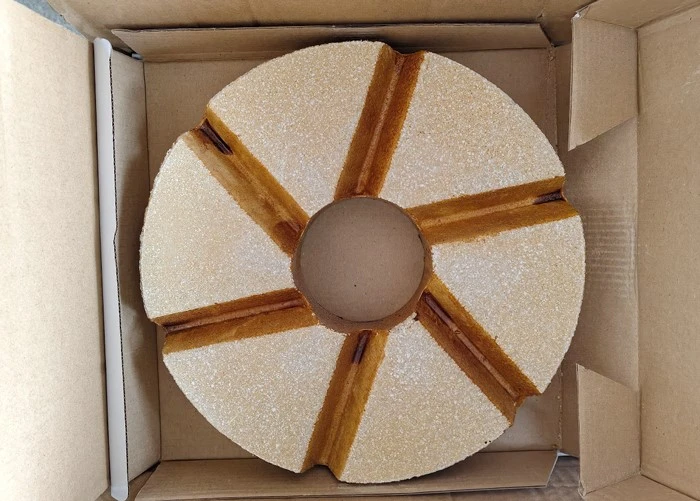
The disc face typically features 4 to 8 deep, radial grooves (as shown in the image) and a central mounting hole. During high-speed rotation, these grooves ensure the even distribution of cooling water across the entire working surface, while also facilitating the rapid removal of slurry and debris generated during the process-thereby preventing surface scorching and the clogging of the abrasive segments.
Common Dimensions:
The outer diameter is generally 8 inches (approx. 200 mm) or 10 inches (approx. 250 mm), with an abrasive layer thickness typically ranging from 30 to 50 mm. The central bore diameter and the rear mounting configuration can be customized to suit the specific flange or chuck design of the grinding head.
Functional Classification:
- Coarse Polishing Type: Contains a high concentration of oxalic acid and coarser abrasives; designed for rapid gloss enhancement and the removal of scratch marks left by 2000-grit wet-sanding discs.
- Fine Polishing Type: Contains a moderate concentration of oxalic acid and finer abrasives; designed to produce a highly transparent, mirror-like finish, thereby reducing the need for subsequent crystallization (surface hardening/polishing) steps.
3_Applicable Stone Types and Equipment
Suitable exclusively for soft, carbonate-based stones; ineffective for hard, silicate-based stones:
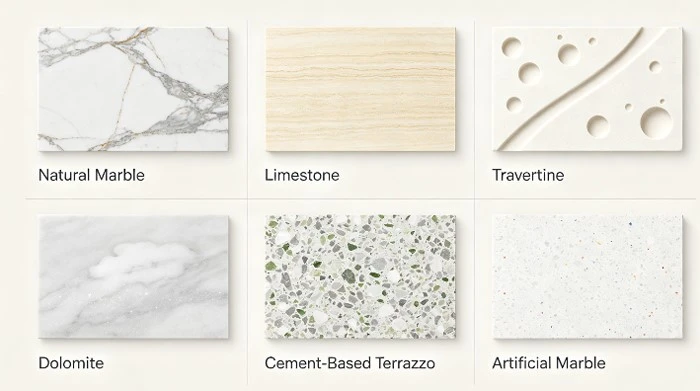
✅ Recommended for: Natural marble, limestone, travertine, dolomite, cement-based terrazzo, and engineered (reconstituted) marble.
❌ Not suitable for: Granite, basalt, quartz, sintered stone, or other silicate-based materials. Oxalic acid does not react chemically with these substances; relying solely on the abrasive component results in extremely low efficiency and may cause surface dulling or scratching.
Compatible Equipment:
Designed for use with single-head manual polishers (swing-arm polishers), bridge-type polishers, or rotary disc polishers. Functionally equivalent to the "Frankfurt-style" oxalic acid abrasive blocks used on automatic continuous polishing lines, this disc-based configuration is better suited for stable, full-coverage grinding with single-head polishing machines.
4_Process Sequence:
The disc-type oxalic acid polishing pad serves as the final fine-polishing step in the overall processing workflow. It acts as a transitional, gloss-enhancing stage-positioned after fine grinding and prior to crystallization (surface maintenance)-and is designed to replace certain polishing steps typically performed with high-grit diamond wet-polishing pads, thereby significantly improving polishing efficiency.
Before use, the stone surface must first undergo coarse grinding (e.g., using 24#–320# metal or magnesite-bonded abrasives) followed by fine grinding (e.g., using 400#–1500# or 3000# resin-bonded pads/blocks) to completely eliminate scratches. Finally, the oxalic acid disc is applied to achieve a high-gloss, mirror-like finish with a gloss reading of 90° or higher.
5_Key Operational Guidelines
1. Always Use Water
Keep the stone surface wet throughout the entire process; dry polishing is strictly prohibited. Insufficient water can lead to an excessively high concentration of oxalic acid, causing uneven corrosion, dulling, or surface burns.
Maintain the proper balance of water volume and pressure: too much water will dilute the oxalic acid and slow down the development of a gloss, while too little water may cause the polishing pad to become clogged or matted.
2. Maintain Consistent Pressure and Movement Speed
Apply moderate, even pressure-avoid excessive pressure on any single area. Move the machine at a steady, uniform pace and use a cross-polishing pattern to prevent the appearance of streaks (light/dark lines) or localized over-corrosion.
3. Promptly Remove Residue
Rinse away the white calcium oxalate residue generated during polishing immediately. If left to dry, it can form stubborn white deposits (efflorescence) that are difficult to remove. Upon completion, thoroughly rinse the surface with clean water and vacuum it dry.
4. Test on Light-Colored Stone First
For pure white or light beige marble, perform a test on a small, inconspicuous area first, carefully monitoring the polishing duration. Prolonged exposure to a high concentration of oxalic acid can cause the stone to take on a yellowish tint or lose its translucency.
5. Replace Worn-Out Pads
Replace polishing pads promptly when the working surface becomes worn smooth or the adhesive backing fails. This prevents the hard base of the pad from coming into direct contact with and scratching the stone.
A friendly reminder from Cheefung Company: Store oxalic acid-based polishing pads in a sealed, moisture-proof environment to prevent them from softening due to humidity or weathering/crumbling.