



Comprehensive Guide to Stone Tumbling (Tumbled Antique Finish)
I. What is Stone Tumbling?
Stone tumbling (also known as Barrel Grinding, Barrel Tumbling, Tumble Finishing or Rotary Tumbling) is a specialized surface treatment process. Small, standard-sized stone pieces are placed into a sealed drum along with grinding media, water, and grinding fluid. As the drum rotates continuously at low speed, the stones rub and collide randomly against the abrasive media and each other. This process rounds off sharp edges, creates an antique or weathered surface texture, and removes burrs.

Core Principle
- The rotation of the drum causes the stones to tumble. Through a combination of mutual impact between materials and the slight cutting action of the abrasives, a natural, irregular, matte-antique texture is created. This differs from the uniform, mechanical sanding patterns produced by fixed grinding blocks on assembly lines; the resulting texture closely resembles the look of natural stone weathered by time and foot traffic.
Applicable Stone Types and Limitations
- Suitable only for small, standard square tiles (up to 300×300mm), small paving stones, "culture stone" (veneer stone), and irregular flagstones. It is not suitable for long slabs or oversized panels, as the tumbling and impact can cause significant material loss and breakage.

(Stone Tumbling bluestone board)
II. Core Applications of Stone Tumbling
1. Full Edge and Corner Rounding
Most Common Use
Freshly cut stone has sharp, pointed edges and corners. Tumbling automatically smooths all four sides and corners into soft, rounded arcs, eliminating the need for manual chamfering. This is essential for courtyard paving, steps, and veneer stone, providing safety by preventing slips and injuries from sharp edges.
2. Antique/Weathered Finish
Signature Aesthetic
Simulates the texture of stone weathered by decades of foot traffic and rain: a fine matte surface with natural, uneven variations in depth and tone, free from uniform mechanical markings. It offers a vintage, "wabi-sabi" aesthetic-a popular choice for boutique guesthouses and landscape design-known in the industry as a "tumbled antique finish."
3. Removal of Cutting Burrs, Chipped Edges, and Sharp Ridges
Post-cutting surfaces often feature rough edges or localized chipping. The tumbling action uniformly smooths out these imperfections, ensuring a consistent appearance across the entire batch of stone and significantly reducing manual repair costs.
4. Processing of Non-Slip Outdoor Stone
After tumbling, the stone surface features a texture of fine micro-pores and irregularities; the slip-resistance coefficient is significantly higher than that of standard matte-finish slabs, making it ideal for garden paths, poolside areas, and park walkways.
5. Supplementary Secondary Processing
Post-tumbling, the stone can undergo resin polishing or nylon brushing to achieve a soft, leather-like matte finish; alternatively, it can be shipped directly as a rough, "antique-style" engineering slab.
6. Unified Texture for Irregular "Culture Stone" Pieces
Irregular, rough-edged stones are tumbled to remove sharp corners and edges, transforming chaotic raw stock into a cohesive, vintage-style product.
III. Comprehensive Tumbling Abrasives/Media (Categorized into Coarse, Medium, and Fine/Polishing Grades)
(1) Tumbling Media (Core material; suitable for both wet and dry processes)
1. Coarse Grinding Media (Removes sharp edges, creates deep antique textures, and deburrs)
- Brown Fused Alumina (Triangular/Rhombic): Offers the strongest cutting power; rapidly removes sharp edges and creates deep, textured antique finishes; the top choice for granite, bluestone, and slate.
- White Fused Alumina: Gentler action; suitable for marble and softer stones (like beige limestone); less likely to scratch the base color.
- Coarse River Pebbles / Crushed Basalt: Low-cost, simple tumbling option; provides only light edge rounding and a rough texture.
2. Medium Grinding Media
Refines surface texture, creates a uniform matte finish
Resin-plastic media and medium-grit ceramic blocks; softens deep scratches from the coarse stage and creates a uniform, soft matte finish; commonly used for indoor antique-style flooring.
3. Fine Polishing/Soft-Finish Media
Creates a delicate, soft matte, silk-like texture
High-alumina ceramic media, walnut shells, and corn cob media; provides no aggressive cutting action-only subdues surface reflectivity to create a delicate matte finish; specialized for light-colored marble and luxury stone pieces, ensuring veins remain unscratched.
(2) Auxiliary Consumables
- Grinding fluid / Brightening agent: Reduces chipping caused by stone-on-stone impact, improves surface uniformity, and prevents stone discoloration (blackening) or water stains;
- Rubber drum lining: Provides cushioning and shock absorption, reducing the rate of stone impact damage.
(3) Roller-type Diamond Tumbling Rollers
Assembly-line roller grinding; specialized for large slabs; distinct from drum tumbling
Two types of "tumbling/rolling" processes in the industry are easily confused;
the distinction is clarified below:
1. Bush-hammering alloy roller
Mounted on bridge machines or floor grinding heads; hard tungsten steel teeth roll and strike the stone to create bush-hammered or antique-style textured surfaces in batches; suitable for large, full-sized slabs.
Applications: Bush-hammering and antique-style chiseling on large exterior wall slabs; involves surface rolling rather than drum tumbling.
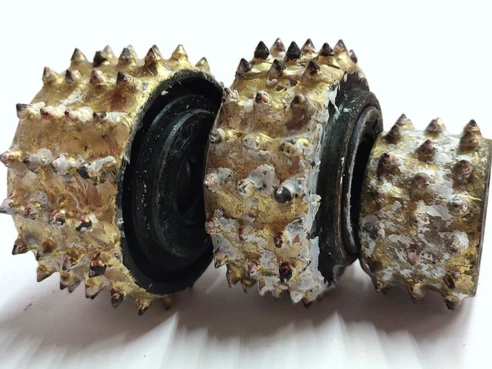
(bush hammer roller for Stone Tumbling)
2. Diamond milling roller
Metal-bonded diamond roller; used for rapidly leveling surface height variations, grooving, creating antique-style brushed finishes, and rough shaping of granite on production lines.
IV. Standard Drum Tumbling Process
- Stone sorting: Select blocks under 300mm; discard cracked or thin pieces to prevent breakage during tumbling;
- Loading and mixing: Combine stone + coarse grinding media + clean water + grinding fluid; stone-to-media ratio of 1:1.2;
- Coarse tumbling (4–12 hours): Fully rounds the edges and establishes the basic antique texture;
- Empty drum and wash; switch to medium-grit ceramic media; medium tumbling (2–6 hours) to refine the texture;
- Fine tumbling (as needed): Switch to soft ceramic media or walnut shells for light polishing and a soft-sheen finish;
- Discharge, high-pressure wash, and dry; ready for final use or subsequent polishing/brushing processes.
V. Pros and Cons of the Tumble-Finishing Process
Advantages
- Enables automated batch processing of hundreds of pieces at once, resulting in very low labor costs;
- Creates a natural, unique, and antique texture that cannot be replicated by standard assembly-line grinding methods;
- Simultaneously rounds all four edges and corners, eliminating the inconsistencies often found in manual chamfering;
- Provides excellent slip resistance, commanding a premium price for outdoor landscaping stone.
Disadvantages
- Limited to small stone pieces; unsuitable for large slabs or long strips;
- Long processing cycles (several hours per batch) make it unsuitable for large-scale projects with tight deadlines;
- Stones are prone to impact damage during tumbling, leading to higher wastage rates for thin slabs or brittle luxury stones;
- Surface texture lacks uniformity, making it unsuitable for premium-finish slabs that require high gloss or perfect flatness.
VI. Summary of Suitable Applications
✅ Suitable for: Small granite pavers, bluestone veneer, slate, antique-style floor tiles, garden steps, flooring for guesthouses or tea rooms, non-slip pool stone, and irregular rough stone;
❌ Not suitable for: Large polished slabs, luxury stone slabs, ultra-thin marble tiles, or finished slabs with a mirror-like high-gloss finish.