



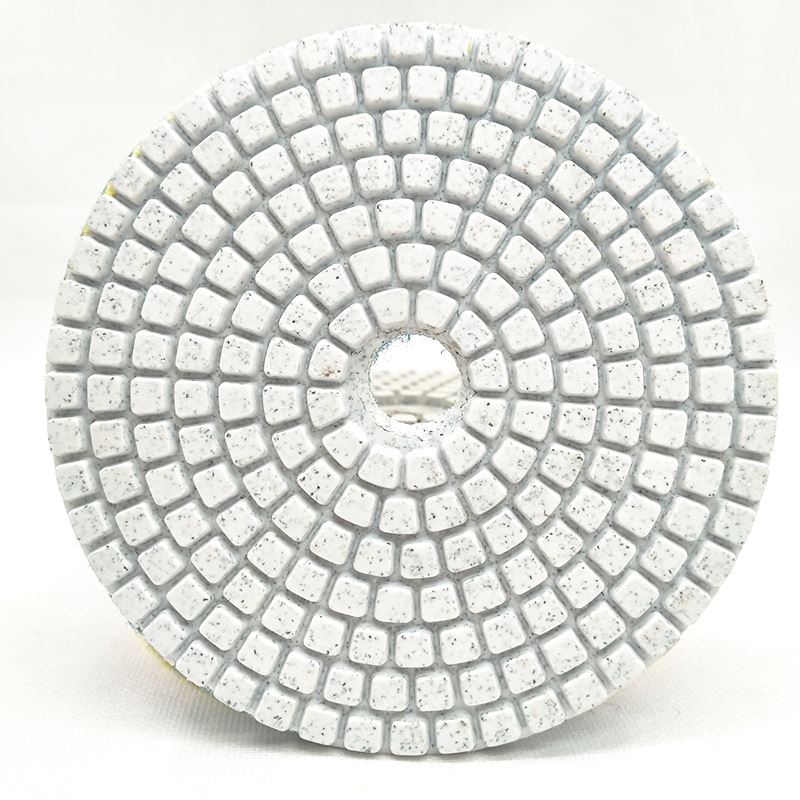
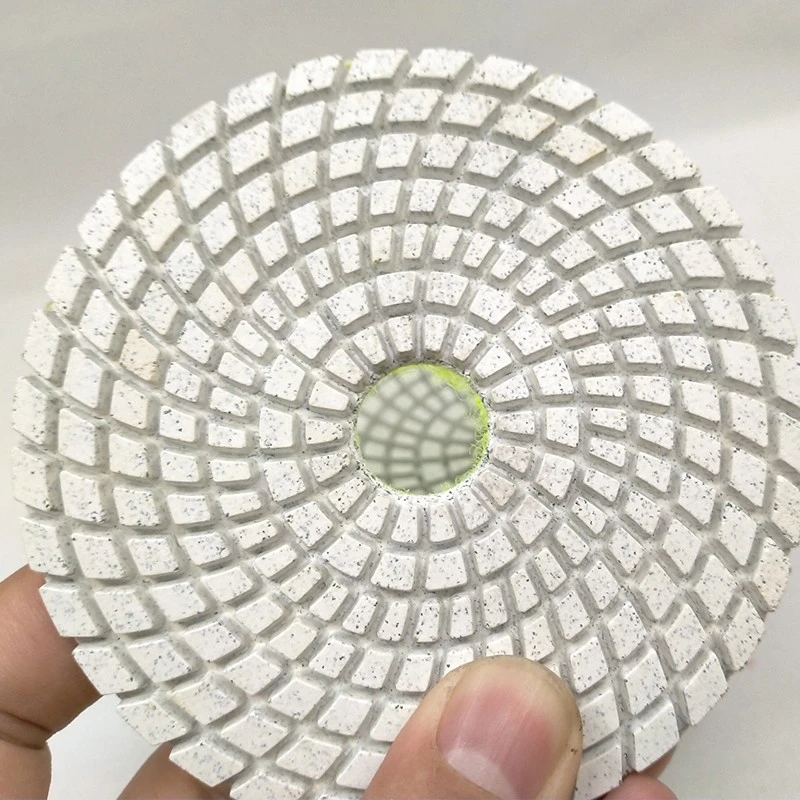
Specialized Diamond Flexible Polishing Pads for Engineered Stone
Product Positioning: Polishing consumables developed for resin-based engineered stone. Engineered stone-composed of resin and compressed stone powder-has low hardness and is prone to heat damage (burning), scratching, yellowing, and surface gumming. These pads utilize a low-heat, high-elasticity white resin formula designed to tackle three major pain points: surface gumming, edge burning, and stubborn scratches. They are ideal for the precision finishing of countertops, curved profiles, and the curved surfaces of undermount sinks.

Ⅱ Specialized Formula and Structure
Key differences from marble/granite polishing pads
1. Core Formula for the Polishing Layer
Uses pure white melamine-modified resin as the bonding agent (a patented formula specific to the engineered stone industry):
- Uniformly white with no dark fillers; prevents pigment leaching that could stain light-colored stone, eliminating yellowing or black marks on countertops.
- Low-friction, low-heat formula minimizes heat generation during grinding, preventing the internal resin from melting or the surface from gumming and losing its luster.
- Fine, uniform diamond micron powder ensures gentle cutting, avoiding deep, coarse scratches on the relatively soft resin-based surface.
- Incorporates lubricating and heat-dissipating fillers to facilitate rapid heat removal under water cooling, preventing board burning during long-term, high-volume processing.
2. High-Elasticity Cushioning Layer
- Features a thickened, flexible resin base with superior elasticity compared to granite pads. It conforms perfectly to full bullnose, half-bullnose, and concave undermount sink curves, cushioning the grinding impact to prevent edge chipping or cracking on thin slabs and complex corners.
3. Velcro Backing
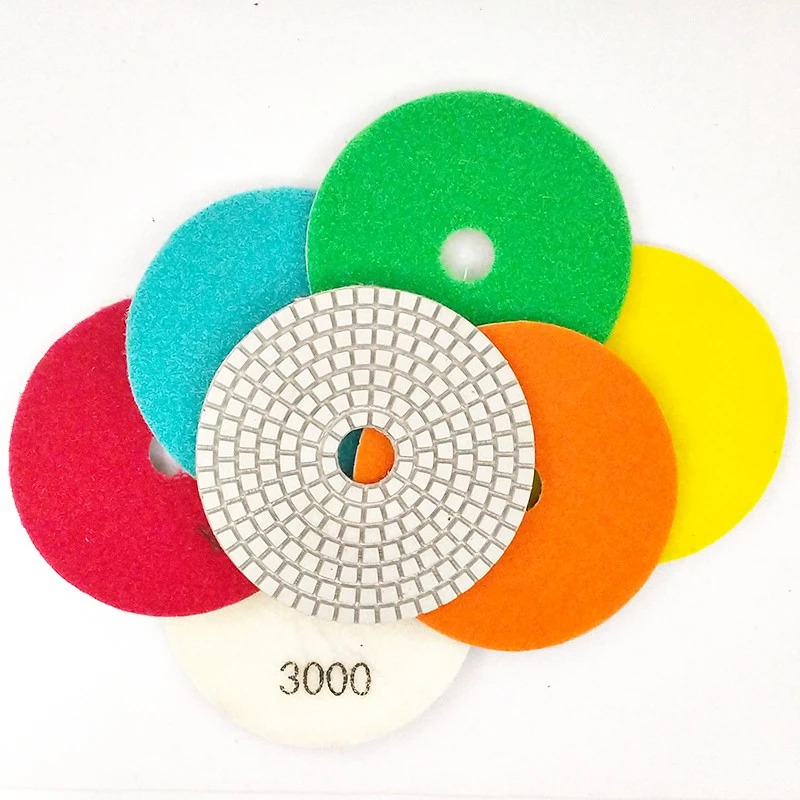
- Features a standard nylon Velcro backing compatible with M14 (European standard) and 5/8-11 (US standard) angle grinder backing pads, allowing for rapid grit changes. Available in mainstream 4-inch (100mm) sizes, with 3-inch versions suitable for narrow corners and the inner rims of undermount sinks.

Ⅲ Standard Grit Progression Set
Skipping grits is strictly prohibited for engineered stone
Engineered stone has a soft resin composition; skipping grit numbers can result in permanent scratches or a hazy finish. This set offers a complete 7-step progression:
| Grit | Process Stage | Function on Engineered Stone |
| #50 / #100 Coarse Grinding | Removing rough milling marks | Removes milling grooves from profiling wheels, saw marks, surface irregularities, and adhesive residue from seams |
| #200 / #400 Medium Grinding (Transition) | Smoothing coarse textures | Softens deep scratches from coarse grinding, unifies surface texture, and prevents localized unevenness or resin burning |
| #800 / #1500 Fine Grinding | Matte softening | Eliminates fine abrasion marks, creates a smooth, uniform matte base, and protects the resin surface layer |
| #3000 / #6000 Mirror Polishing | Enhancing clarity and luster | Produces a uniform, high-gloss mirror finish; the stone's base color remains clear without haziness or whitening |
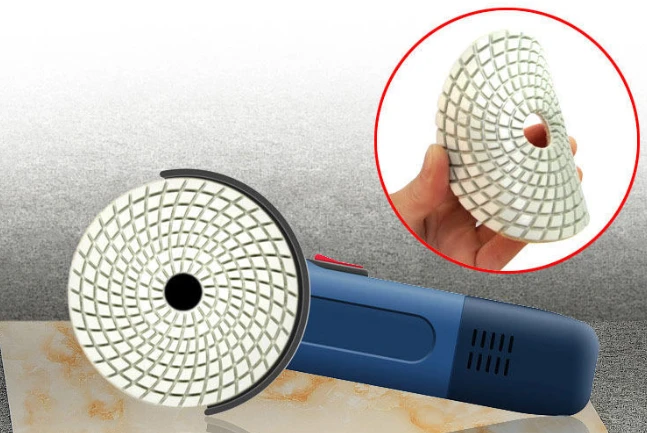
Specially developed for artificial stone, flexible polishing pads
Ⅳ Key Advantages for Engineered Stone
1 Low heat generation; prevents resin burning
- Standard stone grinding pads generate excessive heat through friction when used on engineered stone, causing the surface resin to melt, haze, or permanently yellow. This product utilizes a modified white resin with excellent thermal conductivity and heat dissipation; continuous wet processing prevents burning or loss of gloss, ensuring zero yellowing even on pure white or light-colored engineered stone.
2 Pure white resin; no staining; suitable for all engineered stone colors
- Free from carbon powder or dark-colored wear-resistant fillers; processing off-white, creamy white, or light gray stone does not result in black stains or residue. The finished product is clean and clear-the ideal choice for high-end residential engineered stone countertops.
3 Gentle cutting action; no deep scratches
- Features a uniform distribution of ultra-fine diamonds, resulting in low grinding resistance. Unlike abrasive pads designed for hard granite, these do not scratch the softer resin surface of engineered stone, making final polishing easier and significantly reducing rework rates.
4 Highly elastic and chip-resistant; suitable for thin engineered stone slabs
- The flexible backing conforms tightly to various curves and the concave surfaces of undermount sinks. It effectively dampens vibration, minimizing edge chipping or material loss when grinding the edges and corners of thin (12–18mm) engineered stone.
5 Available in both wet and dry versions
- Wet grinding version (standard for factory mass production): Offers superior heat dissipation, the longest lifespan, and the best polishing results; ideal for batch processing in workshops with a reliable water supply.
- Dry grinding version (for on-site renovation and repair): Uses heat-resistant modified white resin; suitable for repairing scratches or rounding off countertop corners on-site where water is unavailable. Best suited for short-duration, light-duty grinding.
6 Moderate self-sharpening capability; consistent, long-lasting polishing performance
- The resin wear rate is optimized for engineered stone, preventing rapid dulling. Processing with the full grit sequence ensures uniform overall gloss, with no noticeable difference in brightness between flat surfaces and curved edges/corners.
Cheefung's Friendly Reminder
Due to product technology limitations, the polishing pad has shortcomings
- Lacks heavy-duty cutting capability; suitable only for polishing. Shaping must be performed beforehand using brazed diamond profiling wheels.
- Not suitable for prolonged heavy-pressure grinding; excessive pressure can deform the pad, causing wavy patterns to appear on the engineered stone surface.
- The dry grinding version may still generate slight heat during continuous, long-term use, making it unsuitable for high-volume assembly-line production.
V. Standard Processing Workflow for Engineered Stone Countertops
- Rough Shaping: Use a vacuum-brazed diamond profiling wheel to mill full bullnose, half-bullnose, or undermount sink cutout profiles.
- Rough Leveling: Use #50/#100 flexible polishing pads designed for engineered stone to remove deep milling marks and adhesive seams.
- Progressive Refining: Polish sequentially through #200 → #400 → #800 → #1500; skipping grit levels is prohibited.
- Mirror-Finish Polishing: Fine polish with #3000/#6000 to ensure uniform gloss across flat surfaces and curved edges, achieving a clear, haze-free finish.
VI. Comprehensive Application Scenarios
- Precision finishing for kitchen engineered stone countertops and islands.Polishing curved bullnose edges and 45° bevels on calcium-powder and acrylic-based engineered stone.
- Polishing concave surfaces of bathroom vanities and undermount sink cutouts.Use 3-inch pads for tight corners inside undermount sink cutouts; prevents whitening or material burning during inner-curve polishing.
- Processing rounded edges for bay window sills, balcony ledges, and stair treads.
- Polishing complex profiles, door casings, and decorative feature walls.Flexible pads conform to intricate carved details without scratching the stone surface.
- Refinishing old countertops and spot-repairing scratches.Dry-polishing versions suitable for residential sites without water access; removes discoloration, stains, and minor nicks.
- Fine polishing of engineered stone crafts and small decorative ornaments.

The factory is located in Quanzhou City, adjacent to the stone town of Shuitou. Having industrial belt advantages and accumulating a large amount of experience in the research and development and manufacturing of stone grinding tools
VII. Compatible Processing Equipment
- Handheld stone angle grinders with M14 threads (standard for domestic and European markets).
- Trimmers with 5/8-11 threads (standard for North American export markets).
- Benchtop profile edge-polishing machines and small-scale stone CNC machining centers.
VIII. Usage Precautions
- Ensure continuous, ample water cooling throughout the process; dry grinding for extended periods is prohibited, as a lack of water leads to rapid temperature rises that can scorch the engineered stone or cause permanent yellowing.
- Apply light, even pressure and maintain a steady feed rate during grinding; excessive pressure can deform the grinding pad and create wavy patterns on the stone's surface.
- Strictly follow the sequence of progressing from coarser to finer grits; skipping grit sizes will leave behind fine, indelible scratches, resulting in a hazy, dull finish.
- When processing pure white or light-colored engineered stone, prioritize the use of pure white honeycomb-style pads to further minimize the risk of staining.