



How Large is India's Stone Industry?
India is the world's largest exporter and second-largest producer of granite blocks. Its granite resources dominate the global supply chain for engineering-grade stone, and it possesses a comprehensive range of marble, sandstone, and related materials, making it a primary source of imported stone for the Shuitou market in China.
I. Resource Reserve Scale
1 Granite Reserves
India holds approximately 26 billion tons of granite reserves, accounting for over 20% of the global total. The massive, continuous batholiths of the southern Deccan Plateau feature intact ore bodies and low open-pit mining costs; the recoverable yield ranges from 80% to 88%, far exceeding that of typical hilly mining areas found elsewhere.
There are over 200 varieties in steady market circulation; types such as Tan Brown, Black Galaxy, Kashmir White, Multicolor Red, and Indian Red are standard specifications for global engineering projects.
2 Marble, Travertine, and Sandstone
The state of Rajasthan boasts Asia's largest marble belt, home to the world-renowned Makrana White marble (the material used for the Taj Mahal). Reserves of sandstone, slate, and limestone are abundant, encompassing over 80 distinct varieties.
3 The total volume of recoverable stone resources is approximately 1.69 billion cubic meters. Open-pit mines account for over 90% of the total, offering excellent extraction conditions.
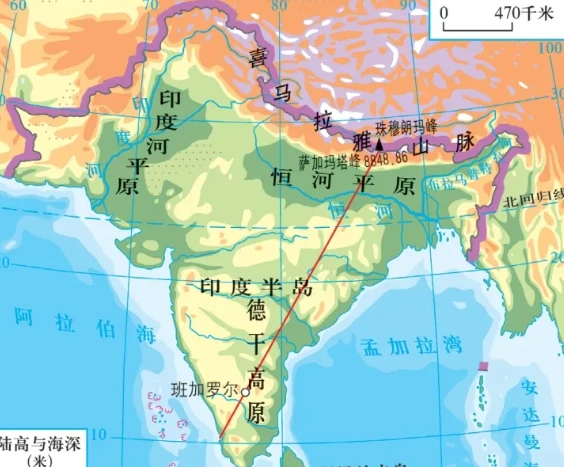
(The distribution of stone in southern and northern India is different)
II. Annual Production and Capacity
1. Granite (Core Industry)
Total national annual extraction of granite blocks: 38–40 million tonnes (equivalent to approx. 1.8–2.2 million m³).
- The three southern states (Andhra Pradesh, Karnataka, and Tamil Nadu) account for 60% of national granite production; the Chittoor mining area in Andhra Pradesh alone produces over 12 million tonnes annually and is the sole core mining belt for "Black Galaxy" granite.
- Conversion to finished raw slabs: Annual output of 3.6–4.4 million m² of raw slabs; notably, annual extraction of "English Brown" blocks reaches 180,000–220,000 m³, with the vast majority shipped to Shuitou, Fujian, for processing.
2. Marble, Sandstone, and Slate
- Annual production of marble blocks is approximately 3.5 million tonnes; combined annual production of sandstone, limestone, and slate exceeds 12 million tonnes, primarily supplying landscaping projects in the Middle East, Europe, and the Americas.
3. Processing Capacity
The country hosts over 5,000 stone processing plants of various sizes, concentrated in two major industrial clusters:
- 1) South (Bangalore, Ongole): Granite cutting and polishing plants, focusing primarily on block exports.
- 2) North (Kishangarh, Rajasthan): Asia's largest marble processing base; the area alone houses over 4,000 marble processing plants, with daily stone trading volume exceeding 15 million rupees and an annual industrial turnover of 600 billion rupees.
III. Export Trade Scale (Global Leader)
1 Overall Export Positioning
Annual total export value of natural stone ranges from US$1.29 billion to US$3 billion; the country ranks first globally in granite block exports and supplies over 50% of the granite raw materials used in global engineering projects.
2 Trade with China (Key Market)
- China is the largest buyer of Indian granite blocks, accounting for 86% of the total value of India's block exports. Annually, 160,000–200,000 m³ of "British Brown" (UK Brown) blocks flow into Shuitou, representing over 90% of China's total imports of this variety.
- Exports to China consist primarily of raw blocks, with finished slabs accounting for less than 15%, creating a supply chain model where India supplies raw stone while China handles deep processing and global redistribution.
3 Other export markets include the US, the UAE (Middle East), Southeast Asia, and the EU; exports to these regions mainly comprise finished slabs, monuments, and paving stones.
4 Policy Impact:
India imposes export tariffs on raw blocks to encourage domestic deep processing; however, due to a lack of local precision processing equipment, the export of raw blocks remains the dominant practice.
IV. Domestic Consumption Market Size
With India's infrastructure continuously expanding, annual domestic consumption of natural stone exceeds $1.25 billion. The construction sector accounts for over 10% of GDP, driving steady growth in domestic demand for municipal roads, exterior dry-hanging cladding, and temple stonework; however, domestic processing yields low added value, and the market still relies on finished imports from China for high-end slabs.
V. Core Industry Characteristics
- High-Volume Orientation: The industry focuses on cost-effective granite for construction projects-featuring controllable color variation, consistent hardness, and Class A low-radiation ratings-making it suitable for global use in exterior cladding, flooring, and staircases. Weaknesses include common natural flaws such as black spots, red veining, and cracks, resulting in significant price disparities between A, B, and C grades.
- Clear Division of Labor: The South focuses exclusively on granite quarrying and rough cutting, while the North specializes in marble slabs. Abundant quarries, high extraction volumes, and low unit prices make the sector ideal for large-scale project orders.
- Industry Weaknesses: Capabilities in high-end polishing and complex shape processing are limited; there is a lack of high-end "luxury stone" varieties, and competitiveness in the high-end decorative stone market lags behind that of Brazil and Italy.
A snapshot of the industry scale: India holds 20% of the world's granite resources, with an annual extraction of nearly 40 million tons of granite blocks and over 5,000 processing plants; it ranks first globally in granite block exports. Notably, more than 90% of the brown and black granite blocks imported by Shuitou, China, for engineering projects originate in India, making the country the world's largest supplier of affordable granite raw materials for such projects.