

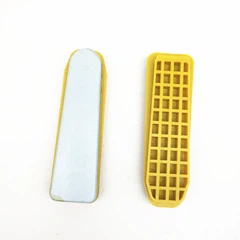
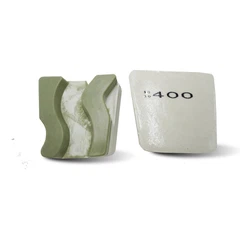
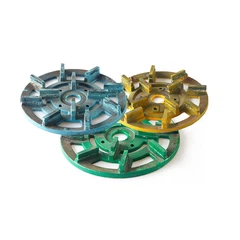


It makes perfect sense why magnesite grinding blocks (often referred to as Frankfurt or Fickert abrasives) were the industry standard for decades. They were inexpensive to manufacture and highly effective for the rough grinding, calibrating, and polishing of natural stone like marble and granite, as well as concrete and terrazzo.
However, their gradual phase-out is the direct result of modern technological advancements in abrasive manufacturing and several inherent flaws in magnesite's chemical makeup
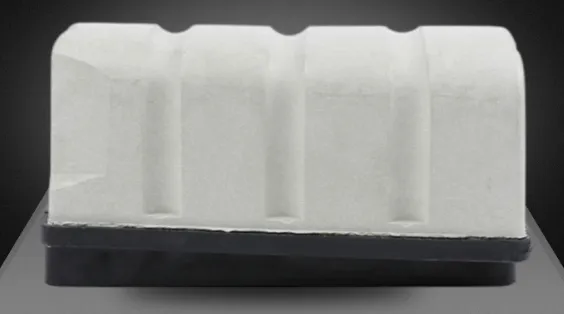
(magnesite bond fickert abrasive block)
Here is a breakdown of why the industry has moved on from magnesite grinding blocks:
1. The Rise of Diamond and Resin Alternatives
The primary driver behind the phase-out is the development of metal-bonded and resin-bonded diamond abrasives.
- Superior Lifespan: While a single magnesite block is cheaper upfront, it wears out incredibly fast. Diamond tools last significantly longer, drastically reducing the machine downtime and labor costs associated with constantly swapping out worn abrasive blocks on an automated polishing line.
- Increased Efficiency: Diamond pads operate at much higher speeds, often yielding four to five times the production output of traditional magnesite abrasives, making them vastly more cost-effective in the long run.
2. Environmental and Maintenance Nightmares
- Massive Slurry Output: As magnesite blocks degrade rapidly during the grinding process, they produce a tremendous amount of thick waste slurry and powder. This heavy runoff is notoriously difficult to manage and frequently clogs drainage systems and sewer lines in stone fabrication shops.
- Cleaner Operations: Modern synthetic and diamond alternatives produce a fraction of the waste, making shop maintenance much easier and environmentally safer.
3. Moisture Sensitivity and Corrosion
- The Hydration Flaw: Magnesite abrasives are typically bound using magnesium oxychloride cement. This specific chemical bond is highly sensitive to moisture-a major vulnerability considering that almost all industrial stone grinding is performed "wet" to control friction and dust.
- Chloride Leaching: When exposed to heavy water use, the chlorides in the magnesite bond can leach out. Just as old magnesite flooring is known to cause "concrete cancer" by rusting structural rebar, the chloride runoff from magnesite grinding blocks can accelerate the corrosion of the expensive, automated grinding machinery.
4. Manufacturing and Supply Chain Hurdles
- Curing Inconsistencies: Manufacturing magnesite blocks requires strict temperature curing. If the temperature fluctuates during production, the chemical bond breaks down. This leads to brittle blocks that crumble prematurely or fail to remove material effectively.
- Raw Material Scarcity: The specific, high-quality reactive magnesium oxide required to produce these bonds has become geographically limited and increasingly expensive to source. As a result, many manufacturers have simply discontinued their magnesite lines entirely because a high-quality raw replacement is no longer viable to procure.
5. Short service life drives up labor and downtime costs
- Magnesite-based abrasives have a loose structure and low bonding strength, leading to rapid wear; their service life is only one-third to one-fifth that of high-grit resin-diamond abrasive blocks. For the same processing area, they require 3 to 5 times more frequent replacements.
- In fully automated continuous production lines, frequent stoppages to change abrasive blocks interrupt the entire line, significantly reducing overall capacity. Large-scale facilities prioritize 24-hour uninterrupted mass production, and frequent tool changes severely slow down output.
- With rising labor costs, the frequent mounting and dismounting of abrasive blocks increases the operators' workload, making the total labor expense far higher than that of diamond-based solutions.
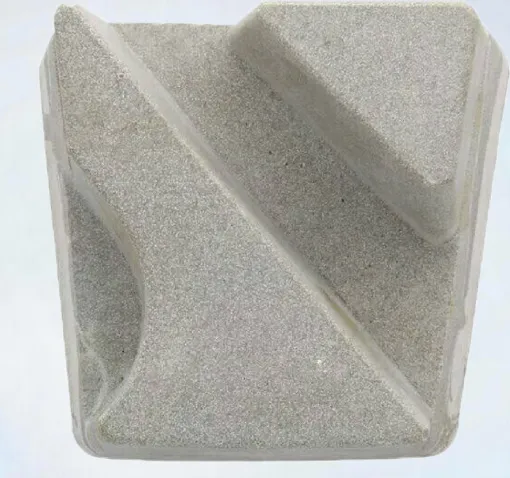
(magnesite bond frankfurt abrasive block)
6. Material defects lead to poor production stability
Prone to "blooming" (white salt deposits)
- Magnesite abrasives are primarily composed of magnesium oxide and magnesium chloride; exposure to moisture or significant temperature fluctuations causes white salt frost to precipitate on the surface. If a block with such deposits is used, large white patches and blotches appear on the stone surface, increasing the scrap rate for entire slabs. Storage requires strict moisture control; if a batch gets damp, it must be discarded entirely.
Low load-bearing capacity and brittleness
- They cannot withstand the high pressures used in grinding machines; excessive pressure causes rapid pulverization or fracturing. Even slight water shortages cause cracking and disintegration. They offer very little margin for error regarding water supply and equipment pressure settings; minor operator errors during machine adjustment result in wasted consumables and damage to the stone surface.
Poor thermal stability
- Heat buildup during prolonged grinding causes the abrasive body to soften and disintegrate. They are unsuitable for long-duration, high-speed continuous operation and cannot keep pace with modern high-speed automatic grinding lines.
7. Total production costs are not actually low; the low unit price is deceptive
While the purchase price of a single magnesite abrasive block is indeed low, the calculated consumable cost per square meter of stone is comparable to-or in some operating conditions, even higher than-that of high-grit resin-diamond abrasives.
Summary of the Current Situation
Ultimately, the stone and construction industries outgrew the limitations of magnesite. The initial sticker shock of diamond and advanced resin abrasives has been entirely offset by their speed, cleanliness, and long-term reliability.
Magnesite abrasives are no longer mainstream consumables for mass production, remaining only in a tiny, high-end niche market. Over 90% of large-scale stone processing plants and production lines exporting to Brazil and Turkey have switched to complete resin-bonded diamond abrasive finishing systems-an inevitable shift driven by comparisons of productivity, cost, and consistency.